Urban Waste Management budget highlights 2023-24
05 June 2023
The City of Cape Town’s Urban Waste Management Directorate’s 2023/24 budget has a strong focus on increasing available landfill airspace through engineering interventions at landfills and building capacity for increased recycling.
The total capital budget for 2023/24 is approximately R714 million.
The three biggest planned capital expenditures for 2023/24 are the design and development of a materials recovery facility (MRF) at Vissershok Landfill for sorting of recycling (R186 million), design and development of the Visserhok landfill site to increase available airspace (R121m), and vehicle replacement (R224m).
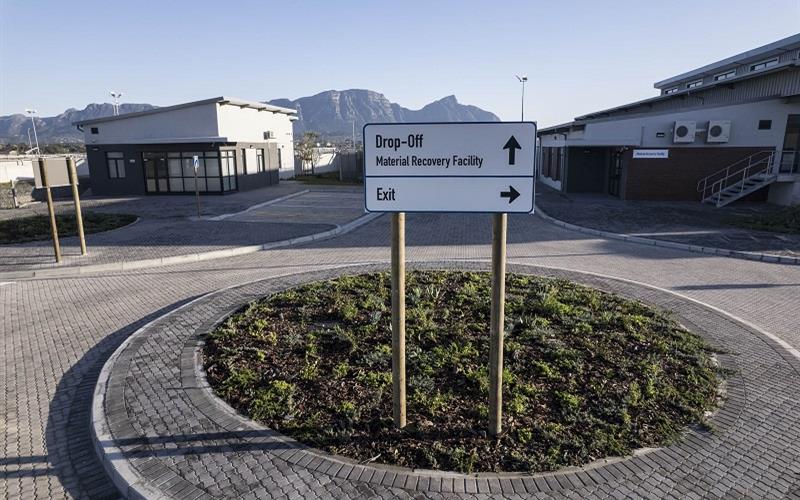
The capital budget for the directorate will also be directed towards the following major capital projects in 2023/24:
- Plant: Replacement (R75m)
- Construction of MRF at Athlone Refuse Transfer Station (R7m)
- Waste to energy infrastructure at Vissershok (R5m)
- Waste to energy infrastructure at Coastal Park (R5m)
- Upgrade of vehicle storage facilities at Maitland depot (R1m) and
- Upgrade of Killarney drop-off (R137 000).
Looking towards the next three years, capital budgets of R329 582 508 and R462 203 439 were approved for the years 2024/25 and 2025/26 respectively, with potential additional projects to be placed on the capital programme in the coming year. This will cover:
- Various depot upgrades
- Upgrades at drop-offs to facilitate improved waste minimisation
- New refuse transfer station at Coastal Park, to reduce travelling distances of collection vehicles
- Refurbishment of the MRF at Kraaifontein Integrated Waste Management Plant, and
- Design and development of a MRF at Coastal Park landfill.
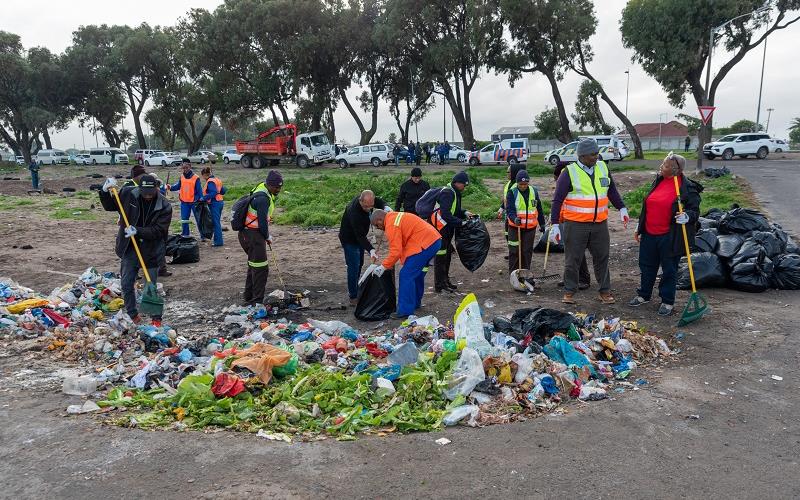
In terms of dealing with the consequences of littering and illegal dumping, various cleansing efforts will receive significant budget:
- Public Employment Programme Cleansing projects – R47m
- Seasonal Cleansing Programme – R65m
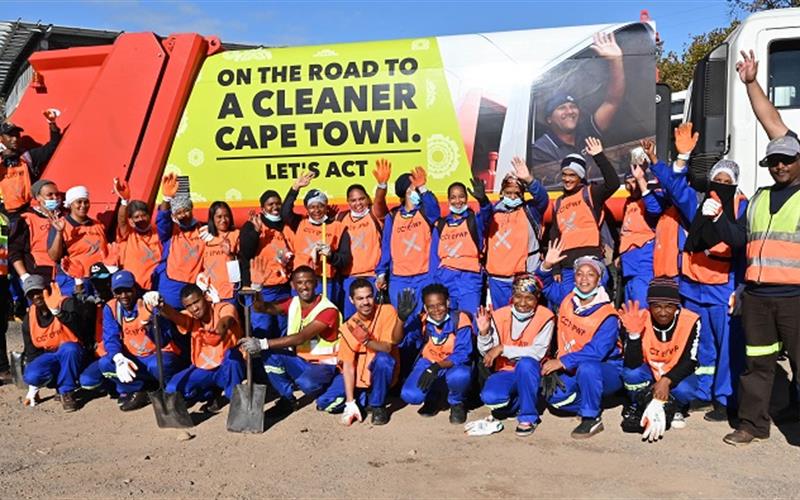
In total, over R680m (including the R47m for cleansing projects mentioned above) has been allocated across the city for creating work opportunities through various programmes which are administered by the Public Empowerment and Development Department within Urban Waste Management. These programmes include: the
Expanded Public Works Programme (EPWP), the Mayoral Job Creation Programme (MJCP), the
Community Development Worker Programme (CWDP) and the
Public Employment Programme (PEP).
On the tariffs side, consumers will experience a 5,5% increase for removal of waste, while the disposal tariff for trucks going over the weighbridge at landfills is increasing by 10,32%. The above inflation increase in disposal tariffs is to cover the cost of landfill airspace, upgrades to transfer stations and investment in material recovery facilities to facilitate improved diversion of organic waste and recycling.
'The City is working to progressively change society's relationship with waste, from one where most waste ends up at a landfill to one where waste is minimised through reuse and recycling initiatives. While this work is under way, we are also investing in increasing our landfill capacity to ensure we do not run out of space before new systems of waste minimisation can be implemented.
'A large investment in vehicle replacement will also help to increase the reliability of waste collections, hopefully with positive effects on levels of illegal dumping,' said Mayoral Committee Member for Urban Waste Management, Alderman Grant Twigg.
End
Published by:
City of Cape Town, Media Office